CLICK HERE FOR THOUSANDS OF FREE BLOGGER TEMPLATES »
Showing posts with label NEWS. Show all posts

Wednesday, April 2, 2008

Bush urges Nato to open its doors to Georgia, Ukraine

BUCHAREST  ( 2008-04-02 10:05:34 ) : 

US President George W. Bush pressed Nato on Wednesday to offer Georgia and Ukraine a 'clear path' towards membership in the transatlantic alliance.
Whether to open the door to the two erstwhile Soviet republics is a divisive issue at the Nato summit that opens later on Wednesday in the Romanian capital Bucharest, in light of Russian objections to Nato's eastward expansion.
"Here in Bucharest, we must make clear that Nato welcomes the aspirations of Georgia and Ukraine for their membership in Nato and offers them a clear path forward to meet that goal," Bush said.
"My country's position is clear: Nato should welcome Georgia and Ukraine into the Membership Action Plan," he said, referring to a Nato scheme to provide a stepping stone to full membership.
"Nato membership must remain open to all of Europe's democracies that seek it, and are ready to share in the responsibilities of Nato membership."
On the eve of the biggest Nato summit yet, French Prime Minister Francois Fillon warned that ushering Georgia and Ukraine into the alliance might upset the balance of power in Europe.
Instead, speaking on French radio, Fillon urged Nato allies to do more to reach out to Russia.
Almost a dozen other Nato member countries are thought to be opposed as well. Under Nato's tradition of decision-making by consensus, only one "no" vote is needed to stop Georgia and Ukraine in their tracks.
In a significant show of Washington's support for Ukraine's Nato ambitions, Bush visited Kiev ahead of coming to Bucharest, after receiving his Georgian counterpart Mikheil Saakashvili last month.
On Monday, Russian Foreign Minister Sergei Lavrov said Georgia and Ukraine were "shamelessly" being pushed towards joining Nato, as he accused the United States of "infiltrating" ex-Soviet states.

Tuesday, March 25, 2008

US envoys call on Musharraf


ISLAMABAD  ( 2008-03-25 15:24:28 ) : 

U.S. Deputy Secretary of State John Negroponte and Assistant Secretary of State Richard Boucher called on President Pervez Musharraf on Tuesday at the Presidential House.
The meeting mulled over all issues including the national political situation. At present, the meeting between the leaders of Pakistan and USA is in progress.
Deputy Secretary of State John Negroponte and Assistant Secretary of State Richard Boucher arrived in the early hours on the latest in a series of trips to the frontline state in the "war on terror".
US embassy spokesman Kay Mayfield said while talking to a French news agency, "They arrived this morning. This is part of an ongoing series of visits to Pakistan -- they will meet with a wide variety of people."

4_news_image ISLAMABAD  ( 2008-03-25 15:24:28 ) : 

U.S. Deputy Secretary of State John Negroponte and Assistant Secretary of State Richard Boucher called on President Pervez Musharraf on Tuesday at the Presidential House.
The meeting mulled over all issues including the national political situation. At present, the meeting between the leaders of Pakistan and USA is in progress.
Deputy Secretary of State John Negroponte and Assistant Secretary of State Richard Boucher arrived in the early hours on the latest in a series of trips to the frontline state in the "war on terror".
US embassy spokesman Kay Mayfield said while talking to a French news agency, "They arrived this morning. This is part of an ongoing series of visits to Pakistan -- they will meet with a wide variety of people."

Thursday, February 7, 2008

Thousands gather for chehlum of Benazir Bhutto


Thousands of people massed around Benazir Bhutto's tomb in Garhi Khuda Bukhsh early Thursday to mark the end of the 40-day mourning period for the slain opposition leader. The day of Muslim prayers and rituals also signals the launch of campaigning by her Pakistan People's Party (PPP) for elections on February 18, with her widower Asif Ali Zardari set to deliver a keynote speech. Many mourners spent the night in tents outside the huge white Bhutto mausoleum in the rural village of Garhi Khuda Bakhsh, listening to mourning songs on tape recorders and reciting verses from the Koran. "We have to win this election -- in our leader's words, democracy is the best revenge," mourner Nabi Bux Kalhoro told Agencies. Party officials said they expected tens of thousands of people to turn out to mark Bhutto's 'chehlum' -- the completion of the mourning period following her assassination on December 27.

Tuesday, January 1, 2008

Mother Lied To Win Hannah Montana Contest


GARLAND, Texas - A North Texas mother made up a tragic story about a father dying in Iraq for an essay contest to win a Hannah Montana prize package.

But the company decided not to award Priscilla Ceballos' daughter with the contest's grand prize, Club Libby Lu CEO Mary Drolet said Saturday in a wr"After awarding the grand prize, we unfortunately learned that the statements made in the essay were untrue," she said in the statement. "Club Libby Lu greatly values honestly and integrity. In order to uphold these values, we have decided to withdraw the award initially given to the Ceballos family."

On Friday, Ceballos told NBC 5 by telephone that it was a big misunderstanding. She said she made up the story to win the contest. No one asked her if the story was true, she said.

Her daughter had beat out more than 1,000 other Hannah Montana fans with the essay she wrote for the Club Libby Lu "Hannah Montana Rock Your Holidays Essay Contest."

"My daddy died this year in Iraq," the little girl wrote in the essay. "I am going to give mommy the Angel pendant that daddy put on mommy when she was having me. I had it in my jewelry box since that day. I love my mommy."

Ceballos told contest organizers her husband was killed April 17, 2007, while serving in Iraq.

Research done by NBC 5 revealed that only one U.S. soldier died on April 17 of this year, and it was not Jonathan Menjivar. Neighbors said the girl's father, a carpet cleaner, is alive and is not a soldier.

The mother's sister said the story was intended to be a Christmas story.
"It was supposed to be told like a Christmas story, a good Christmas story, basically," she said. "And that's what she wrote, a Christmas story. But she didn't know it had to be true or anything."

One neighbor said she couldn't imagine anyone making something like that up, calling it "shocking."

"It's wrong," the neighbor's daughter said. "It's really wrong."

The contest's grand prize was a Hannah Montana makeover inside Club Libby Lu, tickets to Hannah Montana's sold-out concert in Albany, N.Y., in January, airfare and accommodations to the show and a Hannah Montana gift bag.

Club Libby Lu, a sort of salon for tweens, sponsored the contest and invited reporters to a party for Ceballos' daughter on Friday. When the child was asked about the essay that made her dream come true, her mother responded by saying: "We don't really want to talk about that ... OK?"

Shortly after that, Ceballos took her daughter and quickly left the store.

On Friday, Club Libby Lu's public relations firm said it had no reason to believe the information in the essay was false.

In a statement released late Friday, Drolet said: "Club Libby Lu has learned the essay submitted under the name Alexis Menjivar in the Club Libby Lu "Hannah Montana Rock Your Holidays Essay Contest" is untrue. We are reviewing the facts in the matter so that we may determine an appropriate resolution to the situation. Club Libby Lu had no knowledge of the inaccuracies in the essay until 2:45 this afternoon - Friday, December 28. We regret that the original intent of the contest, which was to make a little girl's holiday extra special, has not been realized in the way we anticipated."'

The company said it is awarding the grand prize to another contest winner. Club Libby Lu said it would not disclose the name of the new winner to protect the family's privacy.

Friday, December 28, 2007

16 dead in Nepal bridge collapse

KATHMANDU (AFP) - Sixteen people were killed and 25 still missing from the collapse of a bridge in west Nepal, police said Thursday, calling it a “miracle” the toll was not higher.
“There was panic at the scene when the bridge fell (on Tuesday) so initial estimates were too high. It’s a miracle not a larger number of people died,” district officer Anik Kumar Pandey said by telephone from the remote area.
Police had earlier said they feared hundreds of people had died when the 500-metre (1,650-foot) bridge plunged into the gorge 380 kilometres (240 miles) west of the capital Kathmandu.
Some 400 people heading for a religious ceremony were on the year-old suspension bridge over the Bheri river when one of its supporting pillars gave way.
But many who fell into the icy water managed to swim to safety, police said. Others scrambled to land after clinging on to the fallen bridge, only one-third of which was submerged.
“We’ve recovered 16 bodies and 25 people are still missing,” Pandey said.
Hundreds of police and soldiers were still looking for the missing.
Officials believed the missing might have been swept downstream into the mainly agricultural countryside that surrounds the Bheri, one of Nepal’s largest rivers.
The bridge was crowded with locals who going to a Hindu religious ceremony to celebrate the full moon.
Nepal has hundreds of small bridges in the rugged countryside that range from rope or wooden planks to steel and concrete.
The landlocked Himalayan nation is criss-crossed by dozens of rivers across one of the steepest topographies in the world.
The injured, mostly women and children, who were rescued from the site were treated in hospitals in nearby towns.

Saturday, December 22, 2007

15 dead in Tajikistan avalanche


DUSHANBE: At least 15 people were killed when an avalanche swept down onto a road linking capital Dushanbe with northern Tajikistan, the Central Asian state's interior ministry was quoted as saying on Saturday.

"We extracted 15 bodies from underneath the snow, it is unknown how many remain there," the ministry's spokesman Khudoinazar Asoyev said.

"A massive avalanche Friday closed off a mountain road, trapping large cargo trucks travelling from the north to Dushanbe. Yet another avalanche crashed down on the vehicles when they stopped," Asoyev added.

The country's emergency situations ministry so far confirmed only two casualties.

Saturday, December 8, 2007

Wife says canoe man faked death, hid in home


John Darwin's wife said her husband faked his own death to avoid mounting debts and holed up in the family home for years, hiding from his own sons, according to UK media reports.

The apartment building in Panama City, Panama, where it is belived Darwin's wife Anne lived.

1 of 2


Anne Darwin said her husband, believed by police and his sons to have been lost at sea five years ago, recently returned to the UK, faking amnesia, because he missed his now-adult children, according to The Daily Mirror.
"I didn't think he would get away with it but he had had enough of being dead," she is quoted as saying.
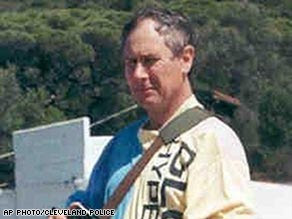
John Darwin, 57, is being questioned by police in northeastern England following his arrest on suspicion of fraud, a spokesman for Cleveland, England, police said.
Darwin walked into a police station in London last weekend -- five years after he was thought to have died after the remains of a canoe he paddled into the North Sea, off northeastern England, washed up on shore.
Darwin was declared dead by a coroner in 2003, 13 months after his disappearance in March 2002.
His wife, the paper reported, described how the prison officer and former teacher discussed faking his death just before he disappeared because of mounting debts.
When John Darwin vanished she said she thought he was dead -- until, she is reported to have said, he turned up on the doorstep of the family home at Seaton Carew, northeastern England, one year later.
"I didn't even recognize him at first," Anne Darwin told the newspaper, adding that her husband looked thin, dirty and smelled dreadful. "I was relieved he was alive, of course. But I was also very angry with him."
She said that her husband stayed at the home on and off before he got a one-room apartment in another part of the large house so he could vanish if friends or family arrived, also disguising himself with a hat or limp when he went outside.
But hiding away began to take its toll, Anne Darwin reportedly said, and the pair decided to leave Britain.
Her husband traveled on a false passport to look at property in Cyprus and inquire about buying a catamaran in Gibraltar, she said, before they finally settled in Panama. She went to live there six weeks ago.
She is believed to be in the United States after leaving Panama on a flight late Thursday, a Panamanian immigration representative has told CNN.
Anne Darwin, the newspaper said, said she intended to repay the total of £155,000 (about $315,000 U.S.) she received from her husband's insurance policies, some of which she used to pay off their home mortgage.
The newspaper said she was not paid for her story and accepts she is likely to be arrested upon her return to Britain.
Following his reappearance last weekend, John Darwin was initially reunited with his two sons, who released a joint statement saying their father claimed to have amnesia dating back to June 2000.


But in a statement released by Cleveland police Thursday, the sons, Mark, 31, and Anthony, 29, said they were in an "angry and confused state of mind" and they wanted no further contact with their parents.
After media reports Thursday that Anne Darwin had confessed to knowing her husband was alive, the sons said: "If the papers' allegations of a confession from our mam are true, then we very much feel that we have been the victims in a large scam."
"In the short space of time following our dad's appearance in London on Saturday, we have gone through a rollercoaster of emotion," the statement said.

Wednesday, December 5, 2007

Suicide Car Bomber Attacks Afghan Army Bus in Kabul, 13 Killed


"A suicide bomber slammed into a bus in Kabul, killing at least 13 people Wednesday - the second such attack in the Afghan capital in as many days. The Taliban claimed responsibility for the bombing, which occurred just as U.S. Defense Secretary Robert Gates wrapped up a two-day visit to the country to assess military efforts against rising militant attacks. Afghan officials say among those killed in today's attack were six soldiers and seven civilians, four of them children. Militant attacks on buses carrying military and government personnel have become increasingly common this year. The Taliban also claimed responsibility for a suicide car bomb attack on Tuesday, which caused no deaths but wounded 22 Afghans. Secretary Gates met Tuesday with Afghan President Hamid Karzai and his army chief Bismullah Khan. Both men told Gates that the Afghan military needs more trainers and equipment to fight the Taliban. Gates said he would try to expedite the requests. He also expressed concern about increasing violence in Afghanistan, pointing out that the trend is - in part - connected to more aggressive efforts on the part of the United States and NATO to go after Taliban militants."

US Defense Secretary in Iraq to Discuss Security Gains


"U.S. Defense Secretary Robert Gates is in Iraq on an unannounced visit to assess the progress in security that has been achieved with a surge of U.S. forces in the country. Gates flew into northern Iraqi city of Mosul for talks with U.S. commanders Wednesday, after ending a visit to Afghanistan. U.S. defense department spokesman Geoff Morrell said Secretary Gates wants to see for himself the progress made since his last visit to the country nearly three months ago. The spokesman said Gates will also meet with senior Iraqi leaders, including Prime minister Nouri al-Maliki, to get their view of the situation and to see what more they can do to build on the progress made so far. In violence, Iraqi police say at least eight people were killed in three separate car bombings in the cities of Mosul, Baquba and Kirkuk. Separately, the U.S. military said two American soldiers were killed Tuesday in an insurgent attack that involved a roadside bomb blast and small arms fire. Two other soldiers were wounded in the attack in Salahuddin province, north of Baghdad. Tuesday, the Iraqi Cabinet agreed to ask the United Nations to extend authorization for U.S.-led forces in the country through the end of next year. The current one-year mandate for U.S. forces expires at the end of this month (December 2007). At"

Sunday, December 2, 2007

Britain's navy ill-equipped for a major WAR


LONDON: Britain's navy is no longer equipped to fight a major war because of years of underfunding and cutbacks, a newspaper said Sunday, quoting what it described as a leaked Ministry of Defense report.

A UK-based newspaper said the navy would have to struggle even to repeat its role in the Iraq war and is ``far more vulnerable to unexpected shocks'' because of its ``under-resourced'' fleet of ``aging and operationally defective ships.''

The paper said the report was ordered by Defense Secretary Des Browne and concludes: ``The current material state of the fleet is not good; the Royal Navy would be challenged to mount a medium-scale operation in accordance with current policy against a technologically capable adversary.''

Asked about the report on Saturday night, the Ministry of Defense said it always declines to comment about ``leaked documents.'' But it said it issued a statement saying: ``The government values the Royal Navy greatly,'' has invested billions of pounds (dollars/euros) in new ships and submarines, and ordered two new aircraft carriers ``which will be state of the art technology and allow us to project force around the globe.''

The ministry said the new ships will be far more capable than their predecessors.

MMA divided on boycott of elections


ISLAMABAD: The Muttahida Majlis-e-Amal (MMA) on Saturday failed to reach a final decision to boycott the general elections but deferred withdrawal of nomination papers till December 15.

“We have decided to keep all options open till the last date of withdrawal of nomination papers which was also necessary to keep the MMA intact,” a central leader of the MMA told ‘The News’ after a meeting of the alliance leadership held here at the residence of Qazi Hussain Ahmad to discuss the issue.

Sources said that following suggestions from MMA Secretary-General and JUI (F) chief Maulana Fazlur Rehman, the Jamaat-e-Islami (JI,) which was represented by its Amir Qazi Hussain Ahmad and Secretary-General Syed Munawwar Hassan, agreed to stop their candidates from withdrawing nomination papers.

The sources said Maulana Fazlur Rehman was of the view that as the announcement to boycott the elections was conditional, therefore, any party of the MMA should not take any decision in haste. Other parties also supported the same stance.

A central leader of the MMA after the meeting said that the proceedings were held in a very cordial atmosphere and there was no criticism of each other. “We have agreed to continue the process of consultation to reach a final decision,” Qazi Hussain Ahmad said while briefly talking to newsmen after the meeting. He welcomed the proposal of All Parties Conference as part of the process of consultations.

He was of the view that the opposition parties should take a decision about boycotting the elections collectively. He reiterated demands about lifting of emergency immediately, and restoration of the judiciary to the pre-November 3 status, saying that fair elections are not possible in the prevailing situation.

Maulana Fazlur Rehman said he would welcome the APDM committee and try to convince them about his stance on participating in the elections. To a question, he said that a final decision would be taken before the holding of the elections. “We are trying to convince each other,” the Maulana said when asked to comment on the committee constituted by the APDM to convince him to boycott elections. He said he considered the decision of boycotting the polls as wrong but still he was ready to continue dialogue with other opposition parties on the issue.

Saturday, December 1, 2007

Nearly 10 Million Children Under 5 Die Each Year -- A Case of Benign Neglect


Kamrul Hassan recognized the signs. The fever, coughing and rapid breathing that afflicted his two-year old daughter, Sweety, were the same symptoms that killed his toddler son three years before. The 35-year-old farmer and father of three in rural Bangladesh knew his daughter needed help, and she needed it fast.


With the support of the American people, Sweety got the help that wasn't available to her brother. She was taken to see Montaj, a volunteer health worker in her village who had been trained through a USAID-funded program to diagnose and treat childhood illnesses like diarrhea and pneumonia, two of the top killers of young children in Bangladesh.

Sweety was diagnosed with pneumonia and given antibiotics, provided by the government of Bangladesh at a cost of a little more than thirty cents a treatment. Just a day later, Sweety was on the mend.She was fortunate; millions more children aren't as lucky. In fact, nearly 10 million children under 5 die each year from preventable or treatable causes like pneumonia and diarrhea.

Americans are a generous people. When we see tragedy unfold before us, we want to help. When the tsunami hit Southeast Asia in 2004, we reached into our wallets and contributed hundreds of millions of dollars. But the tsunami was a major event broadcasted into our homes every night. he tragedy of these lost children does not make the evening news. Their deaths are marked with benign neglect from the rest of the world. Yet, the childhood death toll is equivalent to that of the Southeast Asia tsunami striking children in poorer countries every nine days, year in and year out.


Legislation before the Congress can help to turn the tables on deadly disease and give children a stronger chance to survive.


The bipartisan U.S. Commitment to Global Child Survival Act provides us with the chance to make a major change for the better in this world. How many times in a year, in a decade, is there an opportunity to reshape the lives of children and families in the poorest countries while also reshaping how these people see our own country? The answer: not often. But we have that opportunity right now, if only our elected officials in Congress will show the foresight and resolve to approve this legislation.


Through this bill, we can come together with a single purpose: save the lives of children in the least-developed nations of the world. Children under the age of 5 are dying at a rate of nearly 27,000 a day from preventable and treatable causes. 27,000 children a day! And, nearly half of these deaths take babies less than a month old. We don't hear about this epic tragedy very often because it is happening a world away. It's time we opened our eyes to the world around us and put muscle behind solutions that we know can work.


The Global Child Survival Act would provide basic solutions to the places where they are most needed. Cost-effective and low-tech services like vaccinations, antibiotics, and a simple mix of water, sugar, and salts to treat dehydration can help prevent deaths from unthinkable causes like diarrhea and pneumonia. That's what makes this bill so compelling. We know these initiatives work. They are proven and they save lives. But they won't save the millions of newborns and young children whose lives hang in the balance unless Congress takes action and America leads the way.


It is time for the United States to reclaim its mantle as a global humanitarian and lead the way for the world to save children's lives. Millions of Americans have already endorsed the Child Survival Act. More than 200,000 letters have been sent to lawmakers on Capitol Hill. Members of Congress from both sides of the aisle have joined as cosponsors. We urge the House and Senate to move ahead on this bill and, more importantly, work to end this tragedy.

Friday, November 30, 2007

War Vets Fighting Addiction


They were prepared for war. They were prepared to die for their country. But Fort Carson soldiers say they weren't prepared to come home and fight a different battle -- addiction to illegal drugs.

Many of this country's bravest men and women who volunteered to defend America in a time of war have come home wounded -- physically and mentally -- and are turning to illicit drugs as they adjust to normal life, according to soldiers, health experts and advocates.

"Lots of soldiers coming back from Iraq have been using drugs," said Specialist William Swenson, who was deployed to Iraq from Fort Carson. "Right when we got back there were people using cocaine in the barracks, there were people smoking marijuana at strip clubs; one guy started shooting up," he said.

Fort Carson, just outside Colorado Springs, is home to 17,500 active duty personnel. 4,800 service members are currently deployed in the "sand box" as soldiers call Iraq and Afghanistan. ABC News spoke to more than a dozen soldiers who described widespread abuse of illegal drugs at Fort Carson by service members back from the war.

Specialist Alan Hartmann was a gunner on a Chinook helicopter flying missions from Kuwait into Iraq in 2003. He described the high of flying and the feeling that "nothing can touch you," as well as the terror of being shot at.

Having regularly ferried the bodies of American soldiers killed in combat -- with the helicopter exhaust blowing warm air and the smell of death through the craft -- Hartmann said he had trouble sleeping when he returned to Ft. Carson. The nightmares were too bad, he said.

Army doctors prescribed anti-depressants and painkillers for him -- two-type written pages worth since he's been back -- but he didn't like how the drugs made him feel, Hartmann said. So he said he turned to self-medication with methamphetamines.

"The nightmares were killing me from being over there. The pain was so bad I didn't want to deal with it. Well, amphetamines is a real quick way to get rid of it," Hartmann said. "I was snorting it, and I was smoking it, and then I was hot railing it, and then I got to the point where I was actually injecting it in my arms," said Hartmann, who eventually checked himself into rehab and is now clean.

"(Soldiers are) coming back, drinking, fighting, putting thousand dollar tabs down at a bar and drinking four to five hours, getting to the point where you don't give a crap about anything anymore (or) anybody, don't care if you live or die…the point where you do drugs," Hartmann said. "(Drugs) have been in Fort Carson like crazy."

Another former Fort Carson soldier, Michael Bailey, said he was discharged from the army after testing positive for cocaine. Bailey served two tours, one in Iraq and another in Kuwait.

The stress of his deployment combined with marital problems overwhelmed Bailey who said he twice tried to commit suicide.

"The dose (of anti-depressants) I was on wasn't working, so I was trying an extra one and that wasn't working," Bailey said. "So I started drinking and at one point I did cocaine."

Baily said he failed a drug test the very next day. Even though he was in the process of receiving mental health counseling from the Army, Bailey said he was discharged over his drug use. At the time of his interview with ABC News, Bailey was unemployed and still grappling with feelings of depression and anxiety.

And then there's combat engineer William Swenson who was injured on what was to be his final mission in Iraq when his vehicle drove over a 200-pound improvised explosive device. The blast injured Swenson's spine and he developed syringomyelia -- a condition in which cysts form on the spinal cord.

Swenson said a laundry list of prescribed painkillers was ineffective so he turned to marijuana, the only substance that he said would numb his physical and emotional pain. Swenson failed a drug test after testing positive for marijuana as well as cocaine.

"I think a lot of people using drugs, soldiers mainly, coming back from Iraq, it's just to get an escape from…all those horrible things that came into their mind when they were over there," Swenson said.

Army Denies Growing Drug Abuse Problem

Fort Carson's leadership declined to discuss substance abuse issues with ABC News despite numerous interview requests. Fort Carson also said it could not comment on the individual cases of the soldiers we interviewed, citing privacy concerns.

However, in interviews with ABC News from the Pentagon, the U.S. Army strongly denied there was an increase in drug abuse among soldiers deployed to Iraq.

According to Dr. Ian McFarling, Acting Director of the Army Center for Substance Abuse Programs, less than one half of one percent of soldiers in Iraq have tested positive for illegal drugs. "That's a testament to the kind of leadership we have is that they believe that that's not the place that they should be doing drugs," said Dr. McFarling.

But Dr. McFarling said that once soldiers return from Iraq the positive rate doubles to over one percent. In addition, Dr. McFarling said five percent of soldiers back from Iraq seek help for substance abuse issues from clinical providers.

The U.S. Army does offer treatment for soldiers dealing with drug abuse and Fort Carson has a busy Army Substance Abuse Program. But some soldiers are forced off post because Fort Carson offers no in-patient services; others get treatment in the community to avoid the stigma associated with seeking help, soldiers and advocates said.

Since the Iraq war started in 2003, Colorado Springs hospitals and counseling services have seen a dramatic increase in active duty soldiers seeking treatment for substance abuse. Penrose-St. Francis Health Services went from treating no active duty soldiers for substance abuse before the war to between 30 and 40 now, said Phillip Ballard, the hospital's inpatient psychiatrist.

According to Phillip Ballard, "Now that we have larger numbers than the military facilities can treat…it falls upon the civilian community to treat those patients."

Veterans' advocacy groups charge that the problem of substance abuse is much greater than the army wants to publicly acknowledge, and it's growing.

"I've met with veterans from coast to coast, and I will tell you that there is a catastrophe on the horizon," said Paul Sullivan, director of Veterans for Common Sense.

3,057 veterans of the Iraq and Afghanistan wars were potentially diagnosed with a drug dependency from fiscal year 2005 through March 2007, according to figures provided to ABC News from the Veterans Health Administration. From 2002 through 2004 only a total of 277 veterans were diagnosed with a drug dependency, the numbers show.

"The military right now can say whatever they want, but the truth on the ground is that the soldiers are in a lot of pain, emotional and physical pain, and they're turning to drugs in order to alleviate that," said Sullivan.

Wounded Warriors

More than a dozen Fort Carson soldiers talked to ABC about their drug use, including some willing to be interviewed on camera about their experiences.

--William Swenson was injured in his final mission in Iraq. Prescription drugs provided little relief from physical and emotional pain, Swenson said, so he turned to marijuana and tried cocaine. The army court-martialed Swenson and threw him in jail for 20 days.

--Michael Bailey said he tried to commit suicide twice because of the combined stress of his deployment to Iraq and marital problems. He failed a drug test after using cocaine during a night out on the town.

--Matthew McKane worked as a medic in Baghdad. To escape the daily chaos he and another soldier tried propofol, a powerful anesthetic, McKane said. The other soldier overdosed and died. When McKane returned home he tested positive for cocaine, he said. He is currently in prison awaiting a court martial on misconduct charges. McKane believes he will soon be dismissed from the Army because of his drug use.

--Jeffrey Smith also worked as a medic in Baghdad and said he turned to illegal drugs to cope with emotional trauma inflicted during his deployment in Iraq. After testing positive for illicit drugs, he said he was kicked out of the Army on misconduct charges with no benefits.

--Alan Hartmann was a door gunner on a Chinook helicopter flying missions from Kuwait into Iraq. He suffered from chronic nightmares after returning home and turned to methamphetamines to stay awake, he said.

Five Reasons Sputnik Still Matters


We've looked at every space launch since, and scouted the key missions ahead. But the satellite that started it all is worth a glance back: One groundbreaking Russian robot has made everyday life on earth smarter and faster -- and it ain't finished yet.

Earlier this summer, a crane in Tulsa, Okla., hauled up a rusted 1957 Plymouth Belvedere that had been buried 50 years earlier in a bombproof bunker as a time capsule. The contents included a case of beer, 14 bobby pins, $2.43, a bottle of tranquilizers and 10 gallons of gas -- in case internal combustion engines had become obsolete by 2007.

Despite our best research efforts, we're still relying on internal combustion engines, but much in our lives has changed dramatically since 1957. Some of those everyday changes can be traced back to the launch, 50 years ago, of Sputnik, the world’s first artificial satellite. The launch was a coup for the Soviet Union, and kick-started a new period of scientific innovation in the United States that culminated in the Apollo missions. Even though we haven't returned to the moon since 1972, plans are being hatched to go back -- and go beyond (NASA now says it will send Russian technology to find water on Mars and the lunar surface). Sputnik's impact continues to pervade life in the stars and back home, even as the little silver ball that could hits the half-century mark.

1. Weather You wouldn't want to bet your life on the accuracy of a weather forecast, but we're a lot better than we were in the pre-Sputnik age. The first weather satellite, Tiros I, was launched less than three years after Sputnik -- and quickly found a previously undetected tropical cyclone off the coast of Australia. Equipped with two television cameras, two video recorders and a crude communications system to send images back to Earth, Tiros I snapped 23,000 pictures during its 78-day mission, giving meteorologists their first overhead look at the cloud patterns that characterize storms. A global network of weather satellites came a year later.

Weather prediction has become commonplace on the 6 o'clock news, but now scientists want to use satellites to turn it on its face. Atmospheric researcher Ross Hoffman has proposed using infrared beams from satellites to warm the air around hurricanes as a method to change their direction. Sure, it's a long shot -- but so was Sputnik.

2. Communications The next major satellite milestone occurred in 1962 with the launch of Telstar I, the first "active" communications satellite that could amplify and retransmit incoming signals. Telstar ushered in an age predicted by science fiction author Arthur C. Clarke ( 2001: A Space Odyssey ) back in 1945, when he wrote that satellites "could give television and microwave coverage to the entire planet." The first live transatlantic images were shots of Vice President Lyndon B. Johnson, broadcast from Andover, Maine, to a receiving station in France.

How important is the network of communications satellites that orbits above us now? When the Galaxy IV satellite malfunctioned in 1998, about 30 million pagers went silent, ATM and credit card payments were disrupted, and some television stations simply stopped broadcasting because of a lack of available programming.

3. Google Earth Surveillance satellites have been around since the U.S. Midas (Missile Defense and Alarm System) satellites were launched in the 1960s. But it was only in 2005 that the general public got its first taste of the power of satellite photography, with the launch of Google Earth. Zooming in with ultrahigh resolution on locations both familiar and unfamiliar provides an undeniable voyeuristic thrill -- but the potential of open-access satellite imagery is only beginning to be tapped.

When billionaire aviation pioneer Steve Fossett disappeared last month, crucial rescue workers and volunteers searched for his plane by combing through high-resolution photos snapped by GeoEye, a company that owns two Earth-imaging satellites. And the quality of images should only get better: Last month, DigitalGlobe, the company that provides images for Google Earth, launched its new satellite, WorldView-1. The new satellite will cover 290,000 square miles per day, with a resolution of less than 2 ft., revisiting each spot on average once every 1.7 days. Look up and smile for the camera!

4. Textiles For many people, the first thing that pops to mind when you say "space program spinoffs" is astronaut ice cream -- which, while interesting, is a little too chewy to qualify as a society-altering development. But the Space Race that Sputnik's surprise launch kicked off has produced a surprising number of trickle-down benefits, not all of them obvious.

Some space suits, for instance, contained more than two dozen layers of specially designed textiles, which have been redeployed in various civilian capacities. For example: Teflon-coated fiberglass, first used in the 1970s in space suits, is now found as a roofing material in stadiums around the world, including the 257-ton inflated roof of the RCA Dome in Indianapolis, held up by air pressure.

5. Mars Missions The biggest difference between the pre- and post-Sputnik eras might be that, 50 years ago, we had pretty much finished exploring everywhere we could physically reach. Now there's a universe of unknown destinations that are about as accessible to us as the Americas were to Europeans in 1500, or the North and South Poles were in 1900: We have the tools to get there, but the journey might kill us.

Thanks to new technology, we can take on unthinkable levels of exploration without even sending people -- the rovers that have been trundling around Mars since 2004, space telescopes such as Hubble and the forthcoming James Webb. But President Bush's "Renewed Spirit of Discovery" agenda also calls for a return to the moon by 2020, followed by manned missions to Mars. After that -- well, there are six other planets (seven if you count Pluto) in this solar system alone.

Thursday, November 29, 2007

Musharraf finally doffs uniform


Pervez Musharraf, who will take oath as civilian president today, stepped down as army chief Wednesday and handed over the military command to General Ashfaq Pervez Kayani. General Kayani took charge as 14th Chief of Pakistan Army at an impressive ceremony, held at Hockey Stadium in front of General Headquarters, Rawalpindi. Caretaker Prime Minister Muhammadmian Soomro, Speaker National Assembly Chaudhry Amir Hussain, members of caretaker cabinet, diplomats, as well as senior civil and military officers witnessed the transition of command. The ceremony started with parade by a smartly turned out contingent of Pakistan Army, drawn from troops of Frontier Force Regiment and Azad Kashmir Regiment. During the ceremony, the most important element was the presentation of ‘Change of Command Stick’ to the incoming Chief of the Army Staff. Earlier, buglers announced the arrival of President Musharraf at the stadium. The President was given the presidential salute and national anthem played on the occasion of the farewell parade. President Musharraf then reviewed the parade. Army Band played the drum solo and then the outgoing Chief of Army Staff, General Musharraf presented the traditional Command Stick to the incoming Chief of the Army Staff. President Musharraf, while addressing briefly at the farewell parad"

Tuesday, November 27, 2007

Frantic bid to bridge Middle East divide | Israel and the Middle East | Guardian Unlimited

"The United States was making frantic efforts to close gaps between Israelis and Palestinians last night on the eve of an ambitious and high-risk gamble to 'relaunch' final peace negotiations after seven years of bloodshed and stalemate. President George Bush held separate meetings with Ehud Olmert, the Israeli prime minister, and Mahmoud Abbas, the Palestinian president, at the White House in an 11th-hour effort to agree a joint declaration of principles before today's Annapolis summit - which is shaping up to be the biggest Israeli-Arab conference since Madrid in 1991. At a dinner for the delegates last night, Mr Bush warned of hard bargaining ahead: 'We've come together this week because we share a common goal: two democratic states, Israel and Palestine, living side-by-side in peace and security. Achieving this goal requires difficult compromises, and the Israelis and Palestinians have elected leaders committed to making them.' But pressure from hardliners at home fuelled profound scepticism about the prospects of a breakthrough. The Islamist movement Hamas warned Abbas he would be a 'traitor' if he made concessions to Israel. Israel's opposition Likud leader, Binyamin Netanyahu, said Palestinians were 'not lifting a finger to halt terror'. Thousands protested in Jer"

Cautious hope for Mid-East talks

The US, Israeli and Palestinian leaders have voiced hope that a conference in Maryland could produce a starting point for serious peace negotiations.

Speaking at a formal dinner for participants, US President George Bush expressed his "personal commitment" towards resolving the conflict.

But he warned "difficult compromises" lay ahead for both sides.

Correspondents say expectations for Tuesday's meeting in the city of Annapolis are modest.

More than 40 organisations and countries, including Saudi Arabia and Syria, are attending the conference at a US naval academy.

The US Secretary of State, Condoleezza Rice, has been meeting Israeli and Palestinian teams in an effort to clinch a joint statement that sets out an outline for how negotiations will proceed post-Annapolis.

'This time it's different'

Mr Olmert and Mr Abbas had separate meetings with US President George W Bush in the White House on Monday.

Mr Olmert told reporters the "international support" provided by participants was a crucial factor in his optimism.

"This time it's different because we are going to have lots of participants in what I hope will launch a serious process of negotiations between us and the Palestinians," Mr Olmert said.


But Mr Olmert also cautioned that no peace deal could be agreed without the halting of rocket attacks into Israel from Gaza - controlled by the Islamist movement Hamas, which has stayed away from the conference.

For his part, Mr Abbas praised the initiative but said talks would have to address the thorny obstacles to Palestinian statehood - the "permanent-status issues" - that have felled previous attempts at peace negotiations.

Monday, November 26, 2007

Israel kills 3 Palestinians

TULKAREM, West Bank, (AFP) - Israeli troops killed three Palestinians on Sunday, one of them in a refugee camp in the occupied West Bank and two in the Hamas-run Gaza Strip, officials on both sides said. In the northern West Bank town of Tulkarem, Israeli troops shot dead Mohammad Qozah, 25, of the Al-Aqsa Martyrs’ Brigades, a group loosely linked with president Mahmud Abbas’s Fatah party, medics and Palestinian security sources said. In the Gaza Strip, two Palestinians - one from Islamic Jihad and another from the Popular Resistance Committees - were killed early on Sunday. The army claimed an Israeli patrol saw the men approaching the border fence that separates the impoverished territory from Israel and killed them in a subsequent exchange of fire. Palestinian medics and witnesses said the two men were killed in an exchange of fire after shooting on an Israeli patrol that had entered the central Gaza Strip. Later in the day eight people were wounded in the north of the Gaza Strip by Israeli artillery fire, medics said."

80 Taliban killed in coalition strikes

KHOST (AFP) - Around 80 Taliban were killed in a series of air raids by international military forces near eastern Afghanistan’s border with Pakistan, officials said Sunday. About 65 of the rebels were killed in a single air assault late Saturday in eastern Paktia province on a ‘large group of Taliban’, said Din Mohammad Darvish, a spokesman for the local administration. Four others were killed in a second assault targeting a vehicle carrying rebels in the same region of the province, Patan district, and four in a nearby area, he said. Another three were killed in an air strike near Gardez, the capital of the restive province, he said. “Altogether 76 Taliban were killed in separate air strikes by coalition forces,” Darvish told AFP. The NATO-led International Security Assistance Force (ISAF) and separate US-led coalition could only immediately confirm the last incident, which they said was targeted at three militants spotted planting a bomb near Gardez. The Afghan defence ministry announced earlier that four other rebels were killed in a different part of Paktia, Zurmat, also on Saturday. Seven were seized, it said in a statement. Casualty tolls in battles between insurgents and Afghan security forces and their international allies are often difficult to establish, with officials regularly issuing different"

I have deal with people but no deal with govt: Nawaz Sharif


I have deal with people but no deal with govt: Nawaz Sharif LAHORE: Former premier and PML (N) chief Muhammad Nawaz Sharif rejected the reports that he had retuned to Pakistan as a result of deal with government and said; “I have deal with people but no deal with government.” He stated this while addressing his reception gathering at Data Darbar where he arrived after 11 eleven hours of traveling from the Lahore airport. Nawaz Sharif accompanied by his wife Kulsoom and former Punjab Chief Minister Shahbaz Sharif paid visit to Data Darbar as they arrived here after their seven years of exile. 'Together we will restore democracy and end dictatorship,' Sharif told supporters from the top of a lorry after stopping at one of the city's main markets. 'It is time for a decisive बत्तले.